Recurrent <b>urinary tract infections</b>
Most women in Australia will experience a bacterial urinary tract infection (UTI) at least once in their lifetime. For some women these common infections can become a recurring problem, known as recurrent urinary tract infections (rUTIs).

rUTIs are defined as having 2 or more urinary tract infections over a 6 month period or more than 3 infections over 12 months. These infections have to be diagnosed with a urine culture test showing bacteria and be associated with symptoms in the absence of an obvious cause (like pregnancy). UTI symptoms include pain with urination, blood in the urine, increased frequency, fever, foul smelling or dark coloured urine and general fatigue.


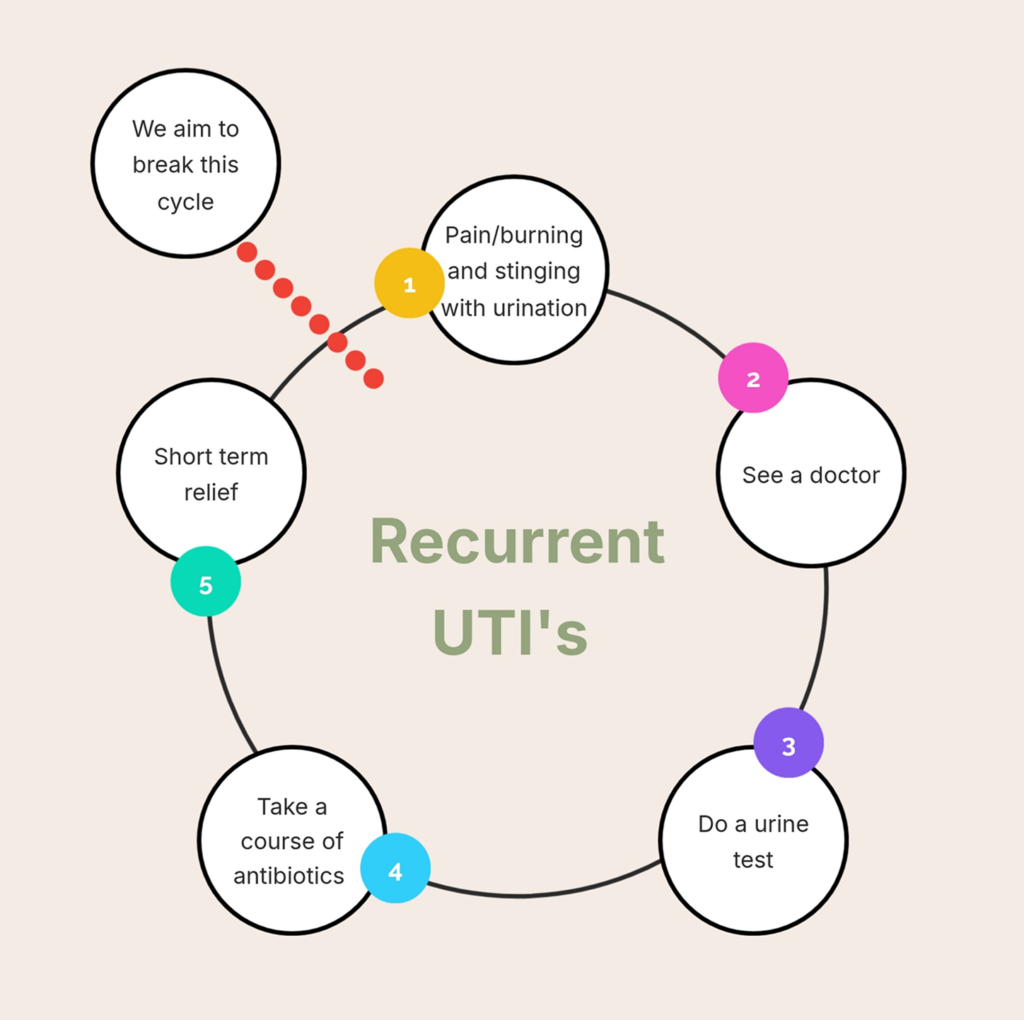
Women with rUTIs tend to be trapped in a cycle of pain, infections, repeated urine tests followed by courses of antibiotics which provide temporary relief before the whole cycle kicks off again. This can be a frustrating and debilitating ordeal which doesn't seem to end.

Recurrent UTI's are not simply bad luck. They are a recognised medical condition with identifiable risk factors and a range of effective management strategies that go well beyond short-term antibiotic treatment. Dr Shahid provides a holistic subspecialist level assessment and a tailored prevention plan to reduce the frequency and severity of your symptoms with the aim of prevent UTIs all together.

What causes urinary
tract infections?

Understanding why some women get urinary tract infections (UTIs) is a fundamental step towards developing an individualised management plan and breaking the cycle of recurrent UTIs.


Most cases of UTIs are caused by bacteria known as Escherichia coli (E coli). These bacteria or 'germs' naturally colonise the anus and frequently ascend to the bladder via the urethra when UTIs occur.


A number of factors can increase the risk of rUTIs and need individual treatment for effective UTI prevention:

  • Menopause and oestrogen deficiency: Oestrogen is required to maintain vaginal and bladder health. It does this by supporting protective lactobacilli and maintaining a normal vaginal pH, both of which reduce bacterial colonisation. Consequentially, the hormonal changes following menopause disrupt the vaginal microbiome and along with atrophy (dryness) makes UTI's more likely to occur.

  • Pelvic organ prolapse (particularly) bladder prolapse can impair your ability to effectively urinate and completely empty the bladder. This pooling of residual urine provides an environment where bacteria can more easily multiply leading to recurrent UTIs.

  • Urinary tract abnormalities: such as bladder or kidney stones, bladder diverticula and cancers can all harbour bacteria making most common infections difficult to treat. This may require a cystoscopy or ultrasound to assess.

  • Medical health conditions: underlying medical conditions can significantly increase your risk of developing UTIs. Without appropriate medical treatment these conditions can impair bladder function and increase your risk of developing UTIs.
    • Diabetes and obesity: high blood glucose levels impair the body's ability to fight infections.
    • Immunosuppression: from medications like prednisolone makes UTIs more difficult to treat.
    • Previous surgery to bladder or urethra: particularly if mesh was used and has now exposed into the bladder.

  • Lifestyle factors: UTIs can be linked to several day to day factors like:
    • Sexual intercourse: sex can trigger UTIs in women as it can introduce bacteria into the urethra
    • Wiping technique: incorrect wiping technique going from the back to the front can transfer bacteria to the urethra
    • Tight fitting synthetic underwear: create a warm, moist environment for bacteria to grow.
    • Spermicides can disrupt the normal vaginal microbiome.

How are rUTIs
assessed?

The management of an rUTIs requires an in depth exploration of the root causes and assessment of symptoms before management is tailored to address individual patient concerns and improve quality of life.

Pre appointment assessment

Before you are reviewed you will be sent an electronic link to complete the following:


  • Bladder diary: to assess your fluid intake habits, the number of times you leak urine and how much urine you produce. A bladder diary is most effective over a 3 day period.

  • Australian Pelvic Floor Questionnaire (AFPQ): this provides a holistic understanding of all your pelvic floor symptoms and the degree to which they bother you.
Appointment review

While at your review:

  • A thorough history will elucidate your specific concerns and general health.

  • Physical examination including a pelvic exam. This allows for assessment of concurrent prolapse, vaginal dryness and pelvic masses or lesions all of which may be exacerbating or causing similar symptoms to a UTI. A rectal exam is usually not required.
Investigations

Urine test to exclude an active urinary tract infection and to establish known bacterial resistance.


Urodynamics: this is an investigation done (in clinic) with the insertion of catheters to test the bladders ability to store and pass urine. This may be required as part further testing as part of your recurrent UTIs assessment.


Pelvic floor ultrasound is also conducted as part of the urodynamics. This allows for assessment of urethral hypermobility (while you leak urine), 3D visualisation of prolapse and how well your bladder empties.

Conservative
management

Effective management of rUTIs requires a personalised, multimodal approach treating acute infections but more importantly focussing on long term prevention. This is achieved through:

Lifestyle measures

Hydration: ensuring adequate fluid intake by drinking plenty of water (1.5 - 2L a day) dilutes the urine and 'flushes' the bladder. Caffeine and alcohol can irritate in the inner lining of the bladder and should be cut down as much as possible.


Voiding habits: this ensures the bladder is frequently and effectively emptying

  • You should urinate every 3 hours (if you need to go before this you should but don't go more than 3 hours without emptying your bladder.
  • Sit comfortably on the toilet, leaning slightly forward with your elbows resting on your knees and both feet firmly on the ground.
  • If you still feel that your bladder hasn't emptied completely after voiding lean then back, count to 10, lean forward and start again


Wiping technique: wipe from front to back (away from urethra)


Wear loose fitting, cotton, breathable underwear: which is less likely to lead to bacterial colonisation

Medical management
Optimising medical issues
  • Managing Diabetes

  • Medication review: patients may be on several natural remedies which may not be beneficial.

  • Managing constipation and bowel habits: there are several treatment options to help with this but most commonly constipation is managed with adequate hydration, aperients and stool softeners.
Antibiotics
  • Once a diagnosis of a UTI is confirmed through a urine culture, your healthcare provider will prescribe antibiotics if indicated. The choice of antibiotic is guided through sensitivity testing (targeting the specific bacteria cultured).

  • Low dose antibiotic prophylaxis may be considered based on your pattern of infections, the bacteria cultured and your other background health.

  • If UTIs occur commonly after sexual activity then a prophylactic antibiotic to be taken after sex can be considered.
Vaginal oestrogen

Vaginal oestrogen is commonly used by doctors to help manage rUTIs. A simple intervention which maintains the vaginal microbiome and pH thus making it less likely to be colonised by bacteria. Well tolerated and established long term efficacy in preventing UTIs. There is now good data that shows vaginal oestrogen is safe to use in patients with previous breast cancer

Cranberry
  • Cranberry products (juice or tablets) contain products called proanthocyanidins (PACs) which make the inner lining of the bladder wall 'slippery' and harder for bacteria to attach themselves to. It has been well studied and some trials show a modest benefit.

  • It is safe and well tolerated with no established daily dose. The high sugar content in cranberry juice should be avoided.
D-mannose

Similar to cranberry supplementation, D-mannose makes it harder to bacteria to attach to the bladder wall. Its efficacy is less well established but there are some trials showing benefit.

Methenamine Hippurate
  • This oral medication works by converting to formaldehyde in the bladder which has antibacterial properties. It is commonly used and well tolerated with decades of evidence to back its use.

  • It makes the urine more acidic and thus adequate hydration is important.
Bacterial Vaccines

As part of management a medical professional may consider an oral vaccine which is an under the tongue spray. The vaccine targets common bacteria causing UTIs and has a growing body of evidence to support its use. It is usually well tolerated.

Vitamin C

This can be used as an adjunct having some synergistic effect with antibiotics.

Surgical management

There is only one established procedure for the management of rUTI's

Bladder injections
What is it?

Bladder injections are a surgical management option for the treatment of recurrent UTIs. Following chronic infections of the bladder, bacterial 'nests' can form and these can be particularly difficult to treat. This procedure directly targets those inflammatory changes by visualising them with a camera (cystoscope) and injecting a combination of specific antibiotics (gentamicin which cant be taken orally), steroids and pain relief into the bladder wall.

The injections work by decreasing inflammation and pain and directly administering antibiotics to the bladder. Most people will need to procedure repeated if their infections start becoming frequent again (down the track), which the average duration between injections of 12 months.

The is done under a general anaesthetic as a day procedure (no overnight hospital admission required) and is quick (takes 15 minutes to perform).

A cystoscope (camera) procedure (through which the injections are administered) also excludes other pathology which could be causing rUTI's (like a bladder cancer, bladder stones, cystitis or mesh exposure into the bladder from previous surgery).

What are the risks?

Bladder injections are overall a safe and well tolerated procedure. There are some potential side effects that are important to understand:


  • No improvement in symptoms (10%)

  • Urinary tract infection: this occurs in 10-15% of cases. Preventative antibiotics are administered during the procedure to help reduce this chance and if you have an active bladder infection, the procedure will be deferred.

  • Bladder symptoms (5%) may initially worsen including urgency and frequency. These symptoms are usually temporary as the inner lining of the bladder can be irritated following the procedure. These symptoms can persist is rare cases. Retention (<1%) is very rare with bladder injections.

  • Bowel symptoms (<1%) including constipation or obstructed defecation are very rare.

  • Bleeding: including a risk of haematoma and the need to return to theatre. Rarely, is this the case (<1%) and it is exceedingly rare to require a blood transfusion (<1%). This risk is increased if you are on blood thinners.

  • Injury to surrounding structures (<1%) including the bladder, ureter, bowel, vessels and nerves. This may require further surgery (at the time or later). In rare cases (<1%), a fistula may develop which is an abnormal connection between the bowel or bladder and vagina.

  • Post-operative complications include a venous thromboembolism or pulmonary embolism.

  • Exceedingly rare complications include cardiorespiratory arrest and death.
What is recovery like?

Bladder injections are done as a day surgery (no overnight hospital admission is required). The procedure itself takes 15 minutes and you are monitored in recovery for 2 hours following the procedure and go home the same day.


Over the next few days it is normal to experience a mild discomfort, slight burning sensation when passing urine or small amounts of blood in your urine. This is normal and settles quickly. The pain is adequately managed with simple analgesia in paracetamol and ibuprofen, if you are able to take it. If your pain is worsening, please call the post-operative phone number or consult your doctor.


Most women return to their normal daily activities the same day or the following day


Tips for success:

  • You should stay well hydrated to flush the bladder and reduce the risk of infection
  • Avoid strenuous exercise, heavy lifting, and swimming for 48 hours
  • Sexual intercourse should be avoided for 48 to 72 hours
  • You can expect some fatigue for the first few days following surgery. During this time, light activities like walking and ensuring you are adequately hydrated are encouraged. This reduces your risk of venous thromboembolism.


You will be contacted by our team and have your post-operative appointment booked in 4 weeks time. We will review your symptoms and confirm that you are emptying your bladder well with an ultrasound. We will ensure that you are closely followed up.

Why choose Dr Usama Shahid as your recurrent urinary tract infections subspecialist?

Recurrent UTI's can be exhausting, distressing and disruptive to your day to day life. They are not something you simply have to live with. There are solutions to this endless cycle of pain, tests and antibiotics.


If you are searching for help with recurrent UTIs, Wollongong-based urogynaecologist Dr Usama Shahid offers comprehensive specialist assessment and personalised prevention strategies right here in the Illawarra.


Why choose Dr Usama Shahid as your recurrent urinary tract infections subspecialist?

Frequently Asked Questions

Do I need surgery for prolapse or urinary incontinence?

Not necessarily. Management options involve doing watching and waiting (and observing progress), conservative (or non surgical options) and then surgical options. Dr Shahid will discuss all available options for your prolapse as an individualised experience. The decision to proceed with any management is always your choice.

When can I return to work following surgery?
  • This depends on the nature of your employment, your background health and the type of surgery you have had.
  • For most patients if you work from a desk, the discomfort after surgery usually subsides fully at around the 2 week mark but most patients return back to work 4 weeks after major surgery.
  • If your job involves lifting >5kg (and no other duties can be allocated to you), then we recommend you take a full 6 weeks off work following surgery, to allow your body to fully heal.
When can I drive after surgery?
  • This depends on the nature of your employment, your background health and the type of surgery you have had.
  • For most patients if you work from a desk, the discomfort after surgery usually subsides fully at around the 2 week mark but most patients return back to work 4 weeks after major surgery.
  • If your job involves lifting >5kg (and no other duties can be allocated to you), then we recommend you take a full 6 weeks off work following surgery, to allow your body to fully heal.
What should I avoid doing after surgery?
  • Avoid heavy lifting (nothing above 5kg for the first 6 weeks). This is to avoid excessive strain on your healing tissues.
  • Avoid sexual intercourse or anything in the vagina for 6 weeks after the operation.
  • Avoid high impact exercise for 6 weeks
  • Avoid excessive straining when opening your bowels. Ensure you are adequately hydrated and if needed take some over the counter fibre, prune juice and simple laxatives.
What are the consultation or operating fees?
  • We focus on providing clear, transparent pricing. Because every patient’s situation is slightly different, we provide a personalised, itemised quote after your consultation – so you know exactly what to expect before making any decisions.
  • Urogynaecology procedures do have Medicare rebates but the exact out-of-pocket cost varies depending on the type of procedure, your private health insurance and individual situation.
  • Please contact our rooms for further queries.
Do I need a referral to see a urogynaecologist?

Yes, referrals are required in order for you to obtain Medicare rebates. Please see your GP and mention you want a referral to see Dr Usama Shahid or otherwise contact our rooms and we will guide you to known GP’s for referrals. 

When should I see a urogynaecologist?

Anytime you are bothered by your symptoms and they are affecting your quality of life. All options for management will be openly discussed with you. There are treatments available. 

What happens during a urogynaecology consultation?

Pelvic floor health is personal, and Dr Shahid understands that. He is committed to making every patient feel at ease. Your first consultation is an opportunity to discuss your symptoms in a confidential, supportive environment. Dr Shahid will take a history, perform an examination to assess your pelvic floor and if needed do further tests like urodynamics and ultrasound before having a robust discussion about options available to you. Thus allowing you to make an informed decision about your care. 

Get in touch.
We’re here to help.

Whether you have a question, want to make an appointment, or your GP would like to refer a patient, we’d love to hear from you.